How AI Employees Are Transforming Small Business Operations

If you run a small business, you know the feeling: you're the CEO, the receptionist, the bookkeeper, the marketing department, and the customer support team — all rolled into one. You wear so many hats that your actual expertise gets buried under an avalanche of administrative tasks. Industry research suggests that small business owners spend an average of 16 hours per week on administrative work that doesn't directly generate revenue.
But what if you could hire a team of tireless, ultra-efficient employees who work 24/7, never call in sick, and cost a fraction of traditional staff? Welcome to the era of AI employees — and they're fundamentally changing how small businesses operate.
What Are AI Employees?
Let's be clear: AI employees are not chatbots. They're not those frustrating automated phone menus that make your customers want to scream. AI employees are autonomous agents — sophisticated systems that can understand context, make decisions, take actions, and learn from outcomes.
Think of the difference between a vending machine and a human barista. A chatbot is the vending machine: press a button, get a predetermined response. An AI employee is the barista: they listen to your order, ask clarifying questions, remember your preferences, handle special requests, and make judgment calls when something unexpected happens.
AI employees don't replace your team — they amplify it. They handle the repetitive work so your human employees can focus on what they do best: building relationships, solving complex problems, and driving growth.

5 Key Areas AI Employees Transform
1. Customer Support
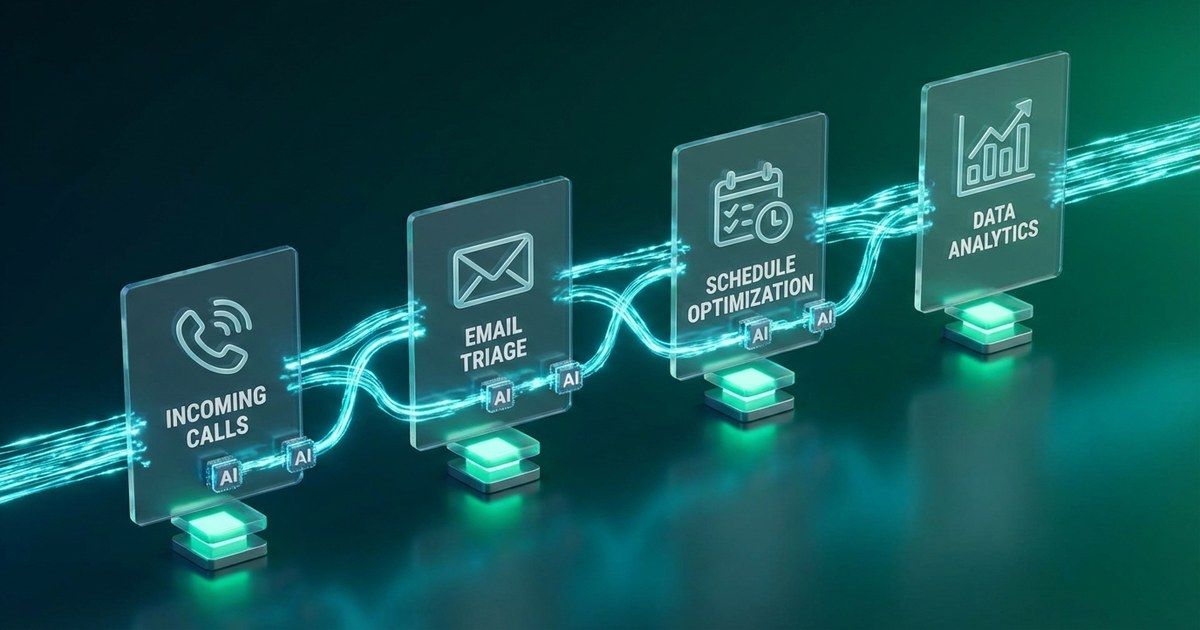
The most immediate impact of AI employees is in customer support. An AI employee can answer phone calls within two rings, respond to emails in seconds, and handle live chat conversations around the clock. They don't just provide scripted answers — they understand the intent behind customer questions, pull relevant information from your knowledge base, and provide personalized responses.
For a small dental practice, this might mean never missing a patient call again. For an e-commerce store, it could mean handling 500 customer inquiries simultaneously during a holiday sale. The AI employee escalates complex issues to human staff while resolving routine questions instantly.
2. Scheduling & Appointment Management
Scheduling is one of those tasks that seems simple but devours hours. An AI employee manages your entire calendar: booking appointments, sending confirmations, handling reschedules, sending reminders, and even optimizing your schedule to minimize gaps between appointments.
A real estate agent using an AI employee for scheduling reported saving 8 hours per week — time that went directly into showing properties and closing deals. The AI handles the back-and-forth of “Does Tuesday at 3pm work? No? How about Thursday at 10?” without any human involvement.
3. Email Management
The average professional receives 121 emails per day. For a small business owner, many of these require action: responding to inquiries, forwarding information to team members, flagging urgent issues, or filing away receipts and documents. An AI employee triages your inbox, drafts responses for your review, and handles routine correspondence autonomously.
Imagine starting your morning with a clean inbox where every email has been categorized, routine responses have been sent, and only the items requiring your personal attention are flagged. That's what an AI employee delivers.
4. Data Entry & Document Processing
Industry estimates suggest small businesses lose up to 18 hours per week to manual data entry. AI employees can extract information from invoices, receipts, contracts, and forms, then enter it directly into your accounting software, CRM, or database. They handle the tedious work of copying information between systems, ensuring accuracy and consistency.
A law firm using AI employees for document processing cut their intake time from 45 minutes per new client to under 5 minutes. The AI extracts relevant information from submitted documents, populates client profiles, and generates initial case summaries.
5. Financial Tracking & Reporting
Keeping track of expenses, invoices, and cash flow is critical but time-consuming. AI employees can categorize transactions, reconcile accounts, generate financial reports, and even flag unusual spending patterns. They integrate with your accounting software and provide real-time visibility into your business finances.
For freelancers and solopreneurs, this means no more shoebox full of receipts at tax time. For growing businesses, it means always knowing exactly where you stand financially without waiting for your bookkeeper's monthly report.
The Real Impact: By the Numbers
The statistics tell a compelling story:
- Time saved: Businesses report saving 20-30 hours per week on administrative tasks
- Cost reduction: Average 60% reduction in operational costs for tasks handled by AI employees
- 24/7 availability: AI employees work nights, weekends, and holidays without overtime pay
- Response time: Customer inquiries handled in under 30 seconds, compared to 4+ hours for human-only teams
- Accuracy: Significantly higher accuracy in data entry tasks compared to manual entry
- Scalability: Handle 10x the volume during peak periods without hiring temporary staff
Perhaps most importantly, small business owners report a significant reduction in stress and burnout. When you're not drowning in administrative tasks, you can actually focus on the parts of your business you're passionate about.
How It Works
Getting started with AI employees is surprisingly simple. The deployment process typically takes about 15 minutes — you configure your business profile, connect your existing tools (phone, email, calendar, CRM), and your AI employee starts working immediately.
There's no complex integration, no lengthy training period, and no IT department required. If you can set up a social media account, you can deploy an AI employee. For a detailed walkthrough, check out our step-by-step deployment guide.
Ready to Transform Your Business?
Join thousands of small businesses already using AI employees to save time, reduce costs, and grow faster. Get started in minutes.
Fill Out the Form →Related notes.

The ROI of AI Employees: Real Numbers from Real Businesses
Real data from businesses using AI employees. Average time saved: 23 hours/week.

AI vs Virtual Assistant: Cost, Speed, Reliability Compared
Data-driven comparison across cost, speed, reliability, and scalability.
AI Answering Service vs Live Answering: 2026 Cost Comparison
A detailed comparison of AI vs traditional live answering services — cost, speed, accuracy.