AI Answering Service vs Live Answering: 2026 Cost Comparison
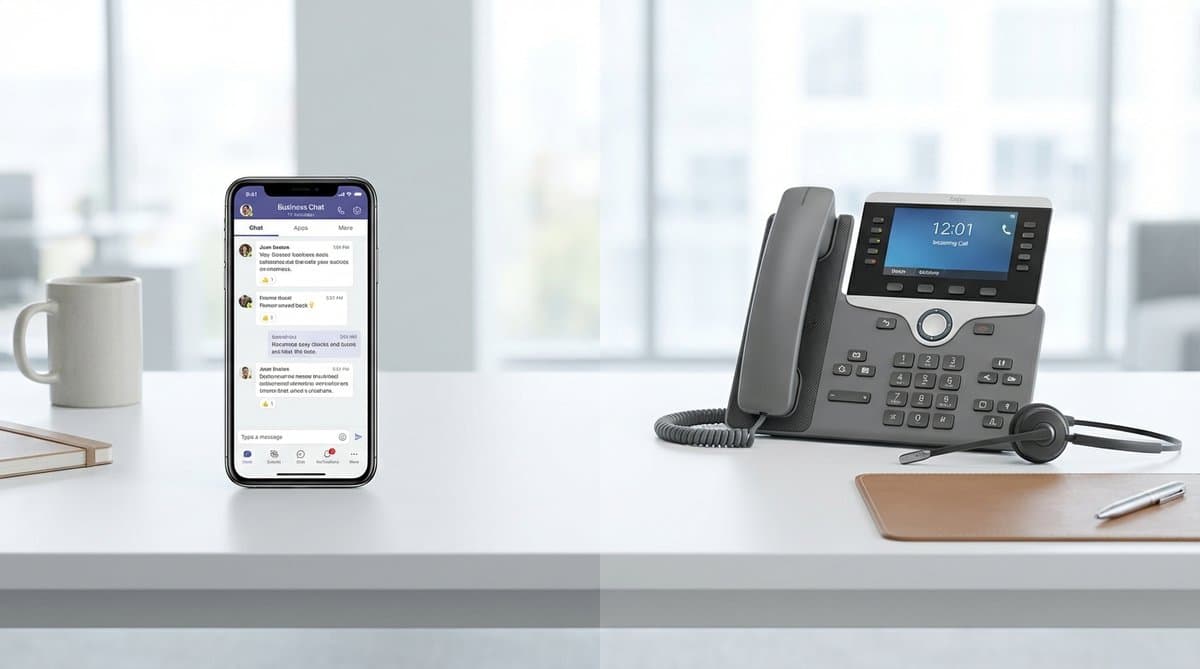
If your business relies on phone calls — and most do — you've probably considered an answering service. The question in 2026 isn't whether to use one, but which type: a traditional live answering service with human operators, or an AI-powered answering service that uses artificial intelligence to handle calls. Both promise 24/7 coverage. Both claim to improve customer satisfaction. But the similarities end there.
We've analyzed pricing, performance data, and customer satisfaction scores from businesses using each type of service. Here's the definitive 2026 comparison.
Cost Comparison: The Real Numbers
Live Answering Services
Traditional answering services charge per minute or per call, and costs add up quickly:
- Basic plans: $0.95-1.50 per minute of operator time
- Per-call pricing: $1.50-3.00 per call
- Monthly minimums: $100-300/month (whether you use it or not)
- Setup fees: $50-200 one-time
- After-hours premium: 20-40% surcharge for nights/weekends
- Holiday premium: 50-100% surcharge
- Typical monthly cost for 200 calls: $600-1,500
- Typical monthly cost for 500 calls: $1,500-3,500
- Typical monthly cost for 1,000 calls: $3,000-6,000
AI Answering Services
- Flat monthly fee: $500-3,000/month (unlimited calls)
- No per-minute charges
- No after-hours or holiday surcharges
- Setup fees: Usually $0 (included)
- Typical monthly cost for 200 calls: $500-2,000
- Typical monthly cost for 500 calls: $500-2,000 (same — flat rate)
- Typical monthly cost for 1,000 calls: $500-2,500 (same — flat rate)
The cost advantage of AI becomes dramatic at scale. A business handling 500+ calls/month saves $1,000-3,500/month with AI. At 1,000 calls/month, the savings can exceed $4,000/month. And critically, there are no surprise bills — AI pricing is flat and predictable.
Speed & Availability
This is where AI answering services pull decisively ahead:
- Answer time — AI: 1-3 seconds | Live: 15-45 seconds (operators juggling multiple calls)
- Hold time — AI: 0 seconds | Live: 30 seconds-3 minutes during peak
- Concurrent calls — AI: Unlimited | Live: Limited by operator count
- After-hours quality — AI: Identical to daytime | Live: Often B-team operators, longer waits
- Holiday coverage — AI: No change | Live: Reduced staff, higher costs
- Scalability — AI: Instant | Live: Days/weeks to hire and train new operators
Businesses that switch from live answering services to AI typically find that the biggest difference isn't cost — it's speed. Callers who used to wait 30-60 seconds are now connected in under 3 seconds. Customer complaints about hold times consistently drop to near zero.
Accuracy & Consistency
Live Answering Challenges
- Operators handle calls for 50-100 different businesses simultaneously
- Limited training on your specific business (usually a brief script)
- Message accuracy issues: misspelled names, wrong numbers, missing details
- Inconsistent caller experience depending on which operator answers
- Difficulty handling industry-specific terminology (medical, legal, technical)
- Language limitations: usually English and basic Spanish only
AI Answering Advantages
- Dedicated to your business — knows your services, pricing, hours, policies
- Deep training on your specific industry terminology and processes
- Perfect message accuracy: digital transcription, no handwriting errors
- Identical experience for every caller, every time
- Handles industry-specific conversations (medical intake, legal qualification, etc.)
- 20+ languages supported with automatic detection
The consistency factor deserves emphasis. With a live service, your 3 PM caller might get a veteran operator who knows your account, while your 3 AM caller gets someone who has never handled your calls before. AI delivers the same quality at every hour.
Capabilities Beyond Answering
This is where the comparison becomes most lopsided. Traditional answering services take messages. AI answering services take action:
- Appointment scheduling: AI books directly into your calendar | Live takes a message to call back
- Payment processing: AI can process payments on calls | Live cannot
- CRM updates: AI logs every interaction automatically | Live sends you an email
- Lead qualification: AI asks qualifying questions per your criteria | Live follows basic script
- FAQ handling: AI answers complex questions from your knowledge base | Live says "I'll have someone call you back"
- Follow-up: AI sends confirmation texts/emails automatically | Live does not
- Analytics: AI provides detailed call analytics and insights | Live provides basic call logs
The difference is fundamental: live answering services are message-takers. AI answering services are task-completers. When a customer calls to book an appointment, a live service says “Someone will call you back.” An AI service says “I have Tuesday at 2 PM or Wednesday at 10 AM. Which works better for you?” and completes the booking on the spot.
When Live Answering Still Makes Sense
To be fair, there are scenarios where live answering services retain an edge:
- Ultra-high-touch businesses: Luxury concierge services, high-net-worth client management
- Complex emotional situations: Crisis hotlines, bereavement services, sensitive medical situations
- Regulatory requirements: Industries with specific human-interaction mandates
- Very low call volume: Under 50 calls/month, a basic live service may be cheaper
- Temporary needs: Short-term event coverage, seasonal overflow (though AI handles this too)
For the vast majority of businesses — professional services, healthcare, home services, hospitality, retail — AI answering services deliver superior results at lower cost.
The Hybrid Option
Some businesses opt for a hybrid approach: AI handles 90% of calls (routine inquiries, scheduling, FAQ, after-hours), with complex or sensitive calls routed to human operators. This provides the speed and efficiency of AI with a human safety net for edge cases. Typical cost: 30-50% less than full live answering, with better overall performance.
Making the Switch
If you're currently using a live answering service, switching to AI is straightforward:
- Week 1: Set up AI with your business info, services, and common questions
- Week 2: Run AI in parallel with live service (both receive calls)
- Week 3: Compare performance metrics side by side
- Week 4: Transition fully to AI (keep live service as backup if desired)
Most businesses complete the switch within 2-3 weeks and see immediate improvements in response time, customer satisfaction, and cost savings.
Bottom Line: 2026 Verdict
For cost, speed, consistency, and capabilities, AI answering services win decisively in 2026. The technology has matured to the point where callers often can't tell they're speaking with AI, and the functional advantages — real-time scheduling, CRM integration, unlimited scalability — make live answering services feel outdated by comparison.
The exception is businesses handling highly emotional or extremely complex calls where human empathy is irreplaceable. For everyone else, the question isn't whether to switch to AI — it's how soon. For a broader comparison of AI vs human assistance, see our guide on AI vs Virtual Assistants.
Compare AI vs Your Current Answering Service
Get a free side-by-side analysis of your current answering service costs vs AI. We'll show you exactly how much you can save — and how much more your callers will love the experience.
Fill Out the Form →Related notes.

AI vs Virtual Assistant: Cost, Speed, Reliability Compared
Data-driven comparison across cost, speed, reliability, and scalability.

The ROI of AI Employees: Real Numbers from Real Businesses
Real data from businesses using AI employees. Average time saved: 23 hours/week.

AI Customer Service: Why 73% Will Switch by 2027
What's driving the shift to AI customer service and how to prepare.