Customer Follow-Up Automation: After Every Click, Call, and Form

Most small businesses do not lose leads because nobody wanted the service. They lose leads because the follow-up was late, generic, or forgotten.
A customer clicks an ad, fills out a form, watches a video, calls after hours, or replies to a missed-call text. Then the business waits until someone has time. By then, the customer may have called the next company.
Customer follow-up automation fixes the gap between interest and action. It responds quickly, qualifies intent, sends the right proof, routes important conversations, and books the next step while the lead is still warm.
Follow-up should start from the source
A lead from a Google Ads landing page is not the same as a missed caller. A person who watched a service video is not the same as someone asking for emergency help. The first message should reflect where the lead came from and what they likely need.
- Missed call: apologize briefly, ask what they need, and offer a fast next step
- Website form: confirm the request and ask one qualifying question
- Ad click: match the offer from the landing page and reduce friction
- Video campaign: reference the topic and send the most relevant next asset
- Old estimate: remind them of the result, proof, and available next step
AI Employees can use the lead source, page, campaign, message, and prior conversation to make follow-up feel specific instead of automated for the sake of automation.
Speed matters, but relevance keeps the conversation alive
Responding in seconds is useful. Responding in seconds with a generic message is only half the job. The follow-up should help the customer make the next decision.
That means asking for missing details, confirming urgency, showing the right proof, or offering an appointment time. The system should not push every lead through the same script.
Good follow-up feels like a prepared team member picked up the conversation exactly where the customer left it.
Use video proof inside the follow-up
Follow-up does not have to be plain text. A short video can answer an objection faster than a paragraph. This is where Vidvibe-style production and AI Employees automation work together.
Vidvibe can create the practical asset library: service explainers, customer proof, pricing context, process walkthroughs, and what-to-expect clips. AI Employees can choose when to send those assets based on the conversation.
For the product page behind creating that practical video asset library, review the VidVibe product page.
- Send a testimonial clip after a quote request
- Send a process video before a consultation
- Send a pricing explainer when cost comes up
- Send a local proof clip after an ad lead asks if the business serves their area
Route urgent leads to humans
Automation should not trap important conversations. The system needs clear escalation rules. Emergency jobs, angry customers, high-value opportunities, payment issues, and sensitive cases should reach a human quickly.
The practical rule is simple: automate the repeatable parts, but keep humans in control of judgment-heavy moments. AI Employees can collect the details first so the handoff is cleaner and faster.
Measure booked actions, not message volume
The goal is not to send more messages. The goal is to recover revenue. Track the numbers that show whether follow-up is working.
- Response time by lead source
- Reply rate after first follow-up
- Qualified leads created
- Appointments booked
- Missed calls recovered
- Quotes revived
- Revenue connected to automated follow-up
Once the business can see which channels and messages create booked actions, it can improve the system instead of guessing.
The first workflow to build
Start with the highest-leakage path. For many local businesses, that is missed calls. For paid traffic, it may be form follow-up. For video campaigns, it may be sending the right proof after someone engages.
Build one workflow, verify it, then expand. The best automation is boring in a good way: it catches the same lead leaks every day without waiting for a staff member to remember.
Automate the Follow-Up Your Team Keeps Missing
AI Employees can respond to calls, forms, ad leads, and video-driven inquiries, then qualify and book the next step.
Fill Out the Form →Related notes.
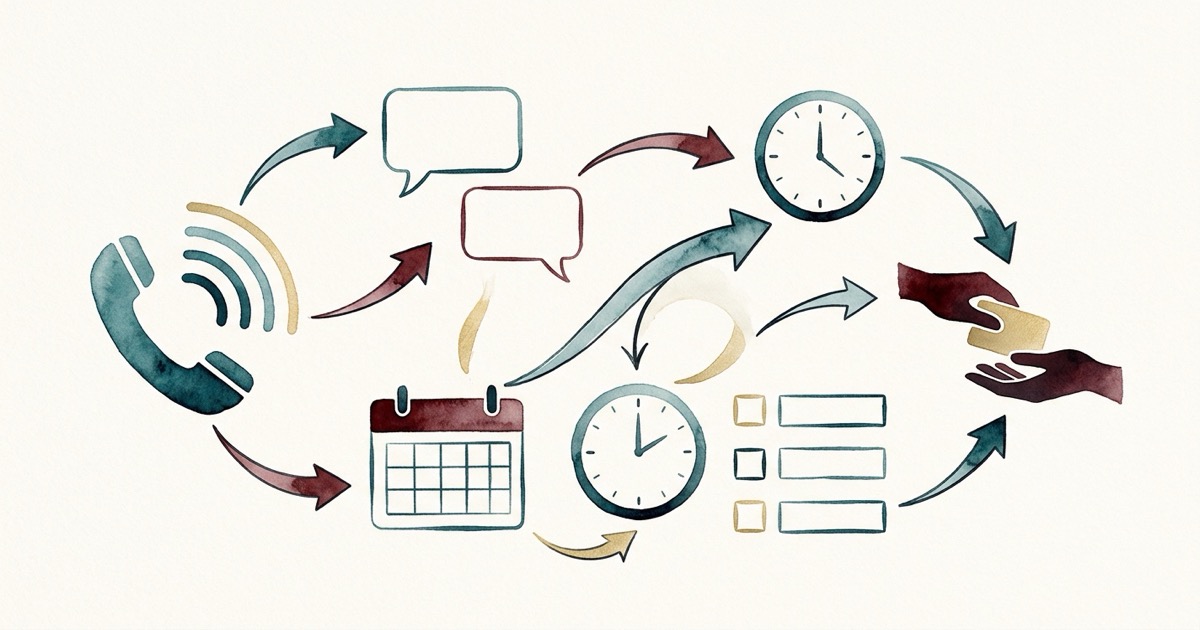
How to Automate Follow-Up After Missed Calls
Build a missed-call follow-up workflow with instant SMS, qualification, booking, CRM logging, and human handoff.
AI Lead Follow-Up: Respond Fast & Book More Leads
AI responds in under 60 seconds, qualifies prospects, books meetings, and revives older leads.
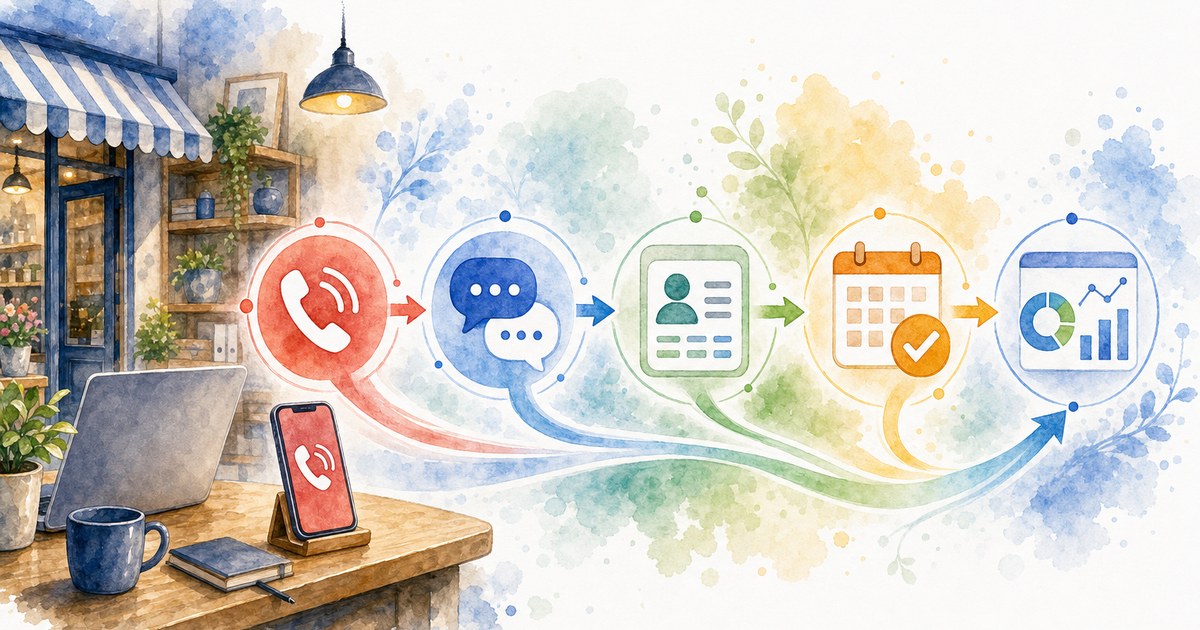
Missed Call Text Back Automation: CRM + SMS Workflow
A practical implementation guide for turning missed calls into CRM leads, instant SMS replies, booked appointments, and measurable follow-up workflows.