AI Video Marketing Automation for Small Business

Small businesses do not need another random content calendar. They need a video marketing system that turns real customer questions, real proof, and real offers into assets that help people decide faster.
That is where AI video marketing automation becomes useful. AI can help find topics, draft hooks, organize production, cut repurposed clips, write captions, and route the best videos into follow-up sequences. The business still needs judgment, taste, and proof. The automation removes the drag around the work.
Projects like Vidvibe fit this shift naturally. The opportunity is not only making videos. It is building a repeatable production engine that supports ads, landing pages, sales follow-up, recruiting, and customer education.
AIEmployees now maps that repeatable video production engine as a product on the VidVibe product page.
Start with buyer questions, not platform trends
Most small businesses copy what they see on social media and end up with clips that get attention but do not help buyers move forward. A stronger video system starts with questions customers already ask before they call, book, or buy.
- What does this service cost?
- How long does it take?
- What happens after I request a quote?
- What should I prepare before the appointment?
- Why should I trust this business instead of a competitor?
AI Employees can collect these patterns from calls, texts, missed-call replies, form submissions, and support conversations. Vidvibe can turn the strongest questions into briefs, scripts, shot lists, and reusable clips.
Use AI to prepare the shoot
AI is useful before anyone presses record. It can turn messy business knowledge into a practical production plan: topics, hooks, proof points, required shots, CTA options, and repurposing notes.
For a local service business, one 90-minute planning pass can produce a month of focused video ideas. The key is to group videos by buyer intent instead of filming whatever feels interesting that day.
- Awareness clips that explain common problems
- Trust clips that show team, process, reviews, and results
- Conversion clips that answer price, timing, and next-step questions
- Retention clips that educate existing customers after purchase
Batch production instead of chasing daily content
A small business rarely has time to produce video every day. The more realistic approach is batch production. Prepare the topics, record several clips in one session, then let the production workflow create platform-specific versions.
Vidvibe can own that operating layer: brief, capture, edit, approve, publish, repurpose, and measure. That structure matters because small businesses stop publishing when the process depends on memory and spare time.
Video marketing gets easier when every clip has a job: answer a question, show proof, reduce doubt, or move the lead to the next step.
Repurpose each strong idea into multiple assets
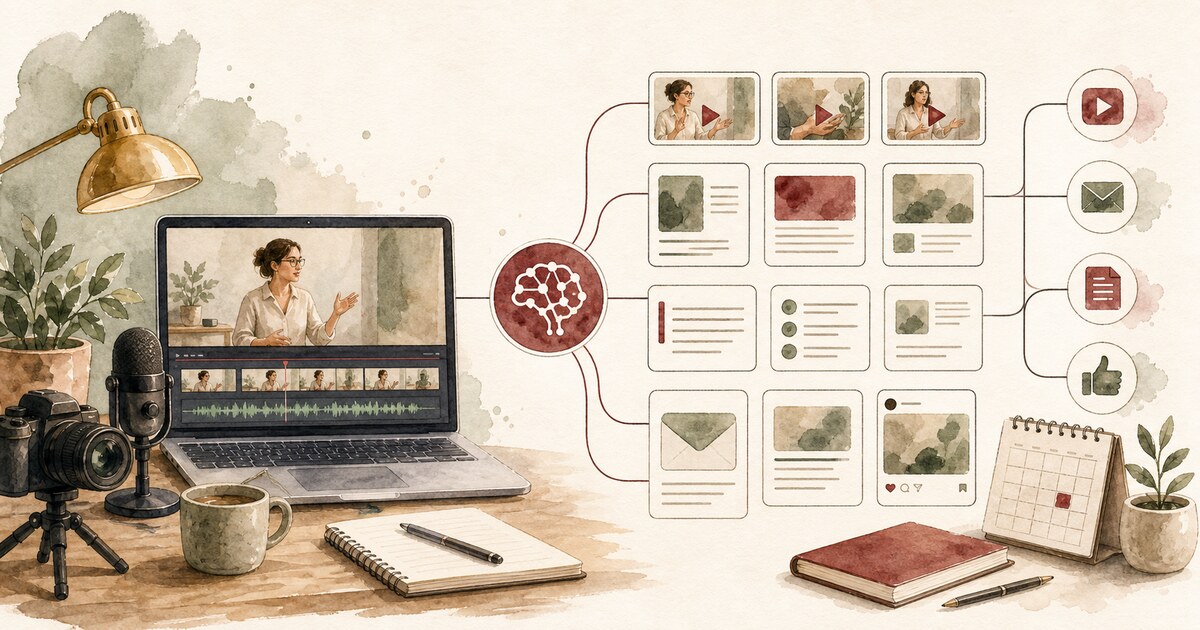
One good explanation should not live in one social post. It can become a short-form clip, landing page embed, email follow-up, SMS link, YouTube Short, retargeting ad, sales enablement asset, and customer onboarding answer.
This is where AI-assisted editing and content operations create leverage. The business does not need more random production. It needs each strong idea to travel across the places where buyers actually make decisions.
Connect video to follow-up automation
The most expensive mistake is treating video as only a visibility channel. A video that answers a buyer question should also become part of the follow-up system.
If someone requests pricing, send the pricing explainer. If a missed caller asks whether the business serves their area, send the local service video. If a quote goes cold, send a short proof clip and a simple next step.
AI Employees can handle that routing: detect the lead source, understand intent, choose the right message, send the right video, update the CRM, and book the appointment when the customer is ready.
A practical 30-day rollout
A small business does not need a giant brand campaign to start. It needs a small library that supports revenue.
- Week 1: collect top questions from calls, forms, reviews, and sales notes
- Week 2: create 12 Vidvibe-style briefs with hooks, proof points, and CTAs
- Week 3: batch record founder, service, proof, and objection-handling clips
- Week 4: publish the first set and add the best videos to follow-up workflows
That is the practical direction for AI video marketing in 2026: not more noise, but a reliable video system tied to lead capture and customer communication.
Build Follow-Up Around Your Video Engine
AI Employees can connect Vidvibe-style video assets to missed-call recovery, lead follow-up, CRM updates, and appointment booking.
Fill Out the Form →Related notes.

AI Video Production Workflow: How Small Teams Ship More Content
A practical workflow for planning, shooting, editing, repurposing, and publishing video faster with AI support and Vidvibe.
Content Repurposing Automation: Turn One Video Into a Month of Assets
Turn one useful recording into shorts, emails, blog notes, landing-page proof, and sales follow-up content.

Video Sales Follow-Up Automation for Small Business
Use short Vidvibe-style videos inside lead follow-up so prospects get useful proof at the right moment.