AI Call Translator for Small Business

An AI call translator converts spoken customer audio between languages during or after a call, often with transcripts and summaries. For small businesses, translation should sit inside a larger workflow: intake questions, routing, booking rules, CRM notes, privacy boundaries, and human handoff.
Live translation is powerful, but it is not a front desk by itself.
Translation is one layer, not the whole system
A live call translator can help staff understand a caller, but the business still needs to know what to ask, what to promise, when to escalate, and where the call summary should go.
That is why an AI call translator should connect back to bilingual AI receptionist, multilingual customer calls, and AI intake assistant workflows.
Use live translation for the right moments
Live translation is most useful when a real-time conversation matters: urgent service calls, appointment coordination, support clarification, intake follow-up, or a handoff from AI to a human who needs language help.
It is less useful when a simple Spanish missed-call text or structured intake form would solve the problem with less complexity.
Keep compliance and trust boundaries clear
Businesses should be careful with medical, legal, financial, safety, and complaint conversations. Translation can support understanding, but it should not turn the AI into a licensed advisor or final decision maker.
The workflow should disclose automation where appropriate, preserve call context, and route sensitive conversations to trained staff.
Transcripts and summaries are often the business value
The translated conversation is only useful if the team can act on it. A practical workflow should create summaries with customer need, urgency, location, language, promised next step, and required follow-up.
Those summaries can feed AI lead follow-up software or broader workflow automation.
Where AIEmployees fits
AIEmployees can help decide whether the business needs live call translation, Spanish answering, bilingual receptionist coverage, or a simpler missed-call recovery workflow first.
The goal is not to install the newest model under the hood for its own sake. The goal is to turn language access into answered calls, booked appointments, clean handoff, and fewer lost leads.
Implementation checklist
- Identify whether the real need is live translation, Spanish answering, missed-call recovery, or staff summaries.
- Define which call types can use translation and which must route to a human immediately.
- Set approved intake questions before connecting translation to booking or CRM.
- Decide how transcripts and summaries should be stored.
- Test audio quality, latency, language accuracy, and escalation on realistic calls.
- Use paid/private tiers for real customer conversations when data-use terms matter.
FAQ
What is an AI call translator?
It converts spoken customer audio between languages during or after a call, usually with transcripts and summaries.
Can live translation run customer service by itself?
No. Translation needs business rules, CRM updates, booking logic, privacy boundaries, and human escalation around it.
When should a small business use call translation?
Use it when staff need real-time language help for callers, but keep humans involved for sensitive or high-value conversations.
Want this workflow built for your business?
AIEmployees can map the calls, intake, routing, follow-up, and reporting around your real tools and team.
Fill Out the Form →Related notes.

Multilingual Customer Calls for Small Business
Handle multilingual calls with language-aware intake, translated summaries, routing, CRM notes, and human escalation.
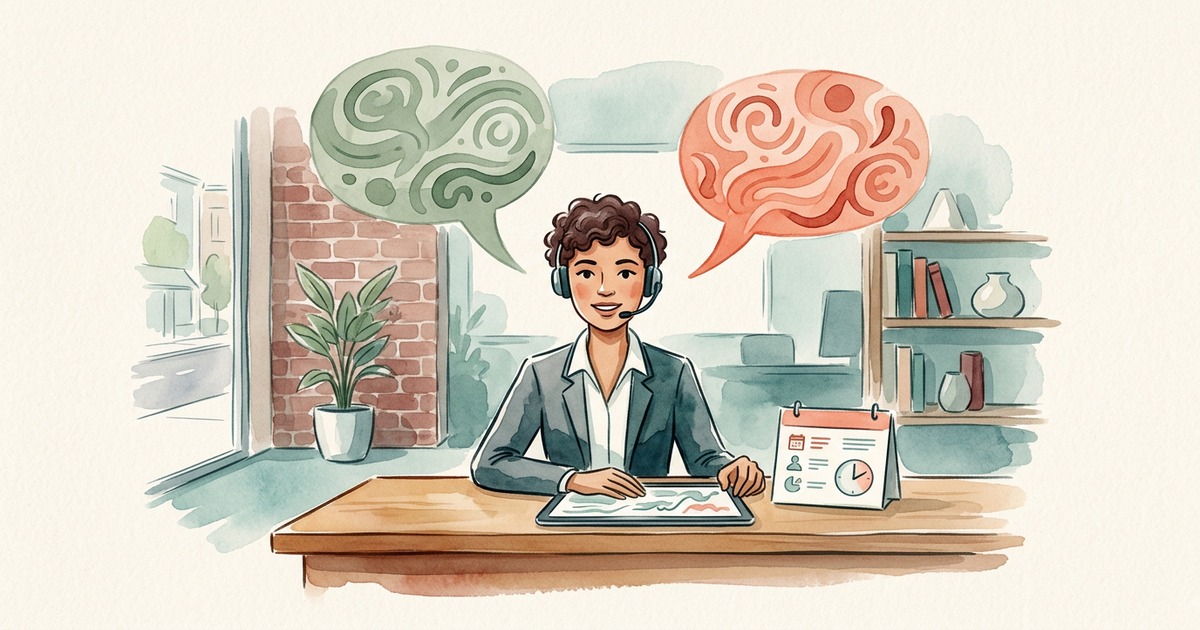
Bilingual AI Receptionist for Small Business
How small businesses can answer English and Spanish calls, collect intake, book appointments, route urgency, and hand off clean summaries.
AI Intake Assistant for Small Business
Qualify calls, forms, texts, and web leads into cleaner CRM records, booked appointments, and human-ready summaries.