AI Receptionist for Property Management
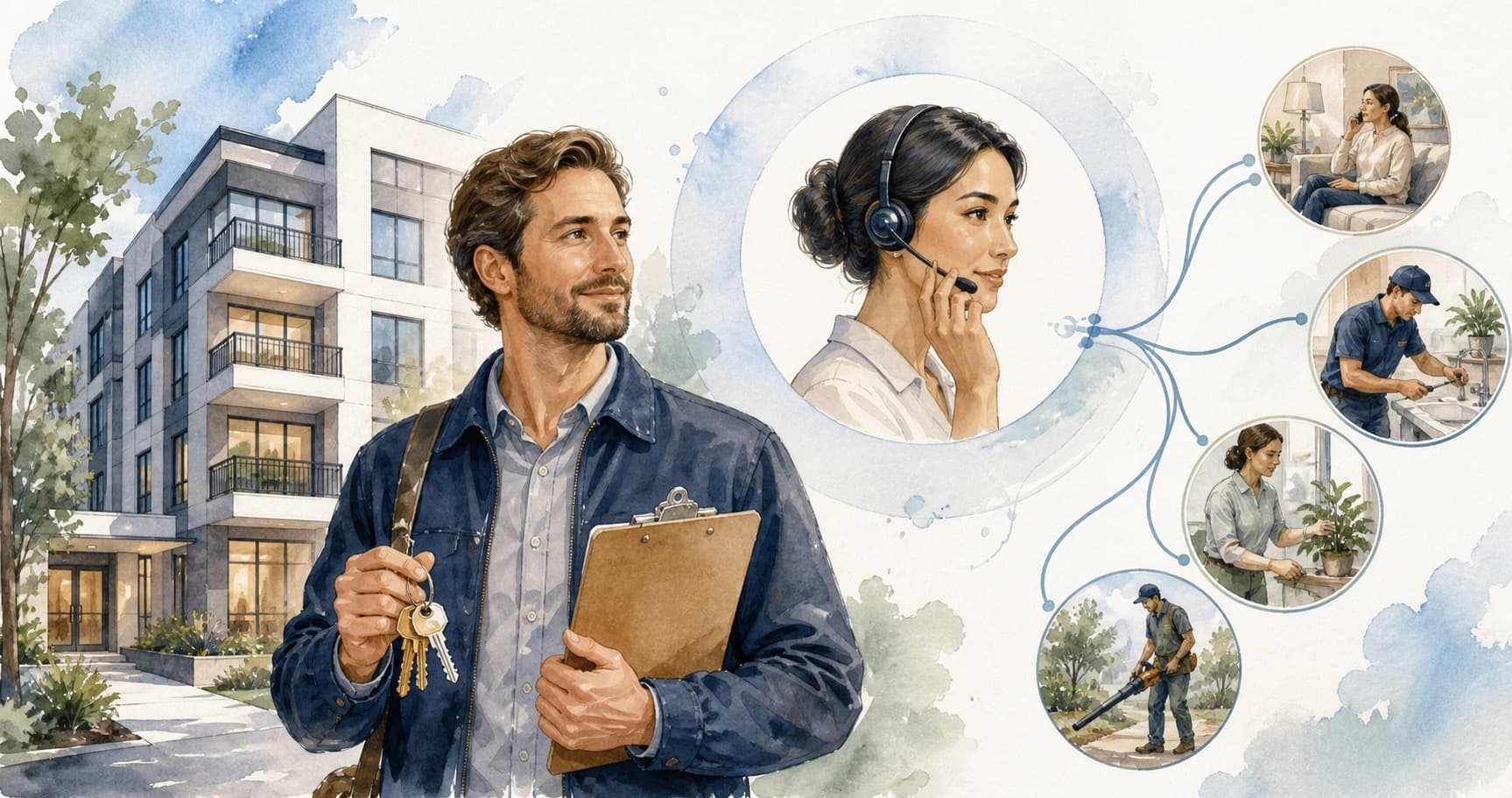
An AI receptionist for property management is a call-and-follow-up workflow for property management teams, not a generic voice bot. It answers the first question, identifies the reason for the call, captures the context staff would otherwise have to chase, and routes a defined next step. The useful outcome is tenant, maintenance, leasing, and owner calls are routed with complete context.
Property management needs a different standard from a generic answering service because one phone number can serve residents, prospects, owners, vendors, and emergencies. The aim is not to make AI a property manager. It is to get the caller identified, document the issue, and move the case to the accountable person without losing the urgency.
Start with the call pattern, not the software demo
A leasing prospect wants a quick answer and tour path; a resident may have maintenance, access, payment, or complaint context; a vendor may need authorization; an owner needs a different escalation route. Lumping those calls into one inbox is exactly what creates slow response and poor resident experience.
Before comparing vendors, pull a representative sample of answered calls, voicemails, and missed calls. Label why each person called, what information the team needed, who owned the next action, and where a caller could be lost. That exercise gives the implementation a real specification rather than a list of attractive features.
What the workflow should collect before handoff
- Tenant, owner, vendor, or prospective renter status
- Property and unit information when available
- Maintenance category, stated urgency, access notes, and a safe callback number
- Preferred callback path, lease/application reference if available, and documentation needed
Each completed intake should reach the CRM, team inbox, calendar, or dispatch queue with a timestamp and a clear owner. A phone number without a service need, location, urgency, and promised next step is not useful intake. If a caller does not qualify, the system should still leave a courteous, accurate record rather than inventing an answer.
Design the routing rules before taking calls live
- Leasing or tour interest → leasing queue with property, budget/timing if offered, and tour preference
- Routine maintenance → maintenance ticket or designated coordinator queue
- Approved emergency category → named on-call path with documented escalation and acknowledgment
- Owner, legal, complaint, or vendor authorization question → human owner; no automated decision
Routing is where an AI receptionist either becomes operationally useful or creates more work. The team should write the rules in plain language, name the on-call owner, set operating hours, and define what happens when nobody accepts the handoff. A missed transfer must fall back to a logged callback task or approved text follow-up; it cannot simply disappear into a transcript.
Three moments the workflow must handle well
A prospective renter calls after the office closes
The agent can identify the property, capture move timing and contact details, answer only approved availability or tour information, and place the prospect in the leasing queue. It should not make eligibility or application decisions.
A resident reports a maintenance problem
The workflow should record the property, unit, issue in the resident’s words, stated urgency, and access constraints. A defined emergency matrix determines whether it becomes an on-call alert, a ticket, or a next-business-day callback.
A vendor asks for authorization
Vendor instructions can carry cost and access implications. The safe role is to capture the vendor, property, work requested, and callback details, then route it to the authorized manager rather than approving work automatically.
What should never be automated without a human
- Habitability, safety, medical, fire, or security emergencies
- Legal, lease, fair-housing, eviction, payment, or application advice
- Vendor approval, access authorization, maintenance authorization, or financial commitments
Good coverage does not pretend every request is routine. It handles repeatable first response, says when a human must decide, and preserves the caller context. Do not give a call agent authority that the front desk, dispatcher, service advisor, or property manager does not actually have.
How to evaluate an AI receptionist for this operation
- Can it identify caller type and property before giving generic answers?
- Can it follow the portfolio’s actual emergency matrix and on-call coverage?
- Does it create a useful ticket or leasing note without exposing unnecessary resident information?
- Can managers audit escalations and correct policy language as properties or vendors change?
Ask every vendor to demonstrate these conditions using your own examples, including an ambiguous caller and a caller who asks for a person. Then review the recording or transcript, the handoff message, the CRM note, and the resulting customer expectation. A pleasant voice is not the decision criterion; reliable execution through the whole workflow is.
A practical first 30 days
- Week 1: start with leasing and routine after-hours intake, not emergencies
- Week 2: validate the property list, emergency matrix, staff contacts, and ticket handoffs
- Week 3: add controlled maintenance triage and sample-review every handoff
- Week 4: measure leasing response time, completed maintenance intake, missed transfers, and resident complaints
Measure answered calls, qualified conversations, booked or routed next steps, missed-call recovery, response time, and unresolved handoffs. Review a small sample of completed calls each week with the people who own the work. That is how the prompt, routing, and follow-up rules become more accurate without turning the business into a testing lab.
Related decisions in this cluster
This page is the industry-specific buyer guide. It complements, rather than replaces, property-management answering service, customer intake automation and customer support automation. Use those pages to compare the adjacent workflow or choose the service layer that fits your operation.
Build an AI receptionist for property management Workflow
AIEmployees designs practical call, SMS, booking, CRM, and human-handoff workflows around how your business actually operates.
Fill Out the Form →Related notes.

AI Answering Service for Property Management
Triage tenant calls, maintenance emergencies, leasing questions, tours, and after-hours property management requests.

AI for Property Management: Handle Tenant Calls Without Hiring More Staff
70% of tenant calls are the same 10 questions. AI handles routine calls 24/7 so your team focuses on what matters.
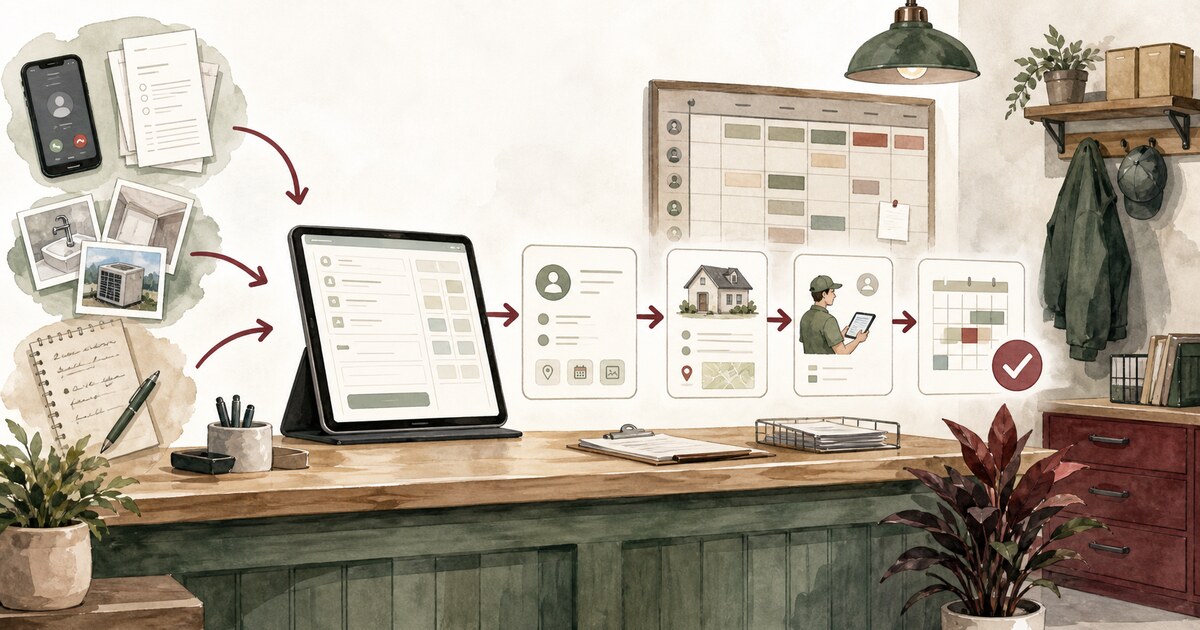
Customer Intake Automation: From First Message to Ready-to-Book
Collect the right details, route urgent requests, and make handoff cleaner for staff.