AI Receptionist for Auto Repair Shops
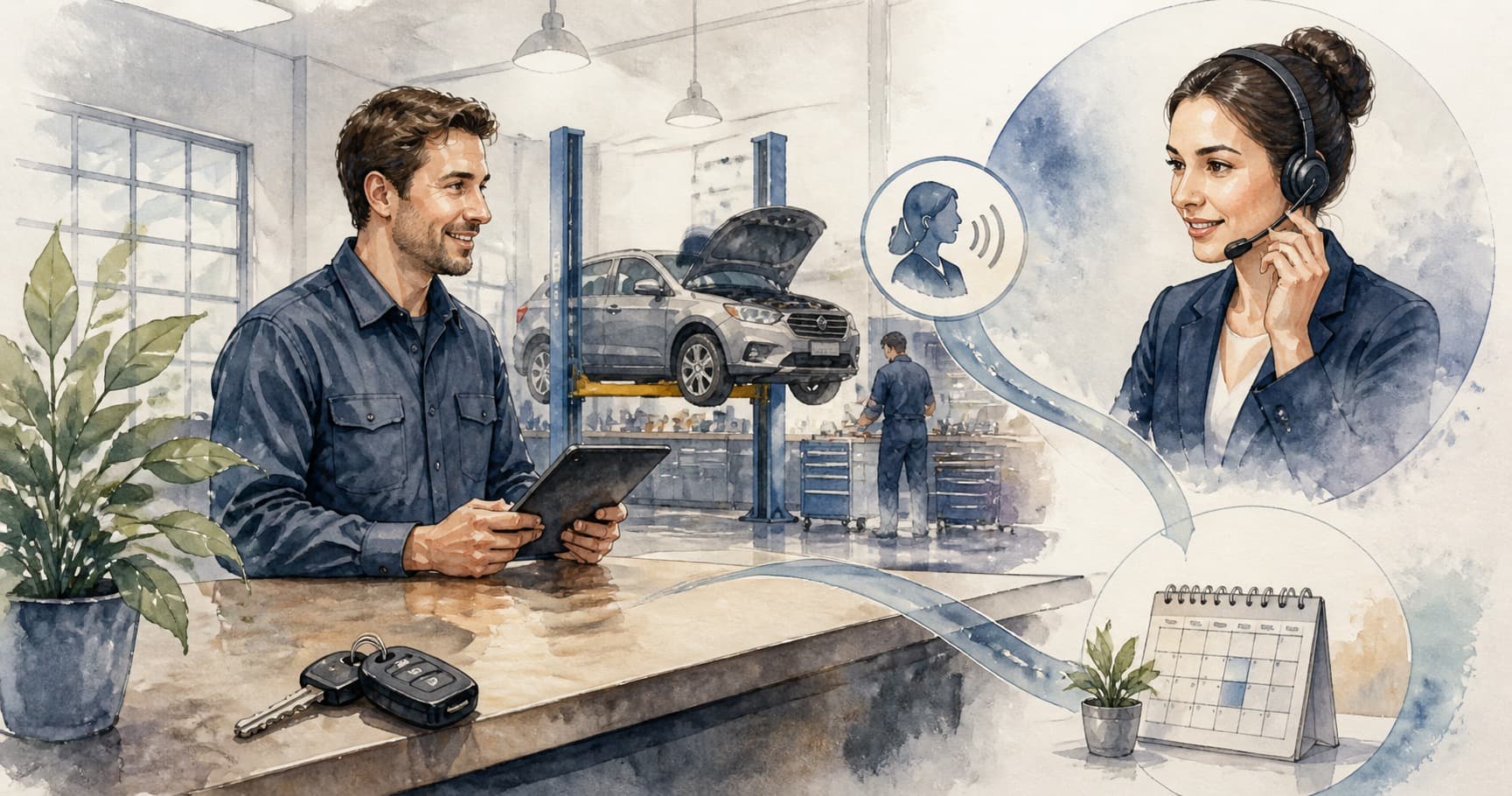
An AI receptionist for auto repair shops is a call-and-follow-up workflow for auto repair shops, not a generic voice bot. It answers the first question, identifies the reason for the call, captures the context staff would otherwise have to chase, and routes a defined next step. The useful outcome is service, estimate, and repair-status calls become organized appointments and callbacks.
An auto repair shop should consider this workflow when service advisors are choosing between the counter, the phone, estimates, and technician questions. The purpose is to protect the customer conversation and create orderly callbacks, not to let an AI diagnose cars or authorize work.
Start with the call pattern, not the software demo
Auto-shop calls divide into new repair requests, existing repair status, appointment changes, estimate follow-up, warranty questions, and parts or vendor calls. The operating risk is treating a caller with a vehicle already in the shop the same as a new booking, or giving price and diagnosis answers before the advisor has reviewed the vehicle.
Before comparing vendors, pull a representative sample of answered calls, voicemails, and missed calls. Label why each person called, what information the team needed, who owned the next action, and where a caller could be lost. That exercise gives the implementation a real specification rather than a list of attractive features.
What the workflow should collect before handoff
- Vehicle year, make, model, and customer-stated service concern
- Drivable status and any urgency the caller reports
- Existing customer, vehicle currently in shop, or new repair request
- Preferred appointment or callback time, phone number, and vehicle/job reference if available
Each completed intake should reach the CRM, team inbox, calendar, or dispatch queue with a timestamp and a clear owner. A phone number without a service need, location, urgency, and promised next step is not useful intake. If a caller does not qualify, the system should still leave a courteous, accurate record rather than inventing an answer.
Design the routing rules before taking calls live
- New request with an available slot → approved appointment path or advisor queue
- Vehicle already in the shop → service-advisor status queue with repair-order reference where available
- Estimate follow-up → advisor callback task with the customer’s question or decision captured
- Towing, safety, warranty, or unclear problem → named human path; no diagnosis or commitment
Routing is where an AI receptionist either becomes operationally useful or creates more work. The team should write the rules in plain language, name the on-call owner, set operating hours, and define what happens when nobody accepts the handoff. A missed transfer must fall back to a logged callback task or approved text follow-up; it cannot simply disappear into a transcript.
Three moments the workflow must handle well
A new customer calls with a drivability concern
The agent can capture the vehicle, reported symptom, location, and contact details, then route the caller to an advisor or approved appointment process. It must not interpret the symptom as a diagnosis or tell the caller the vehicle is safe to operate.
A customer wants an update on a repair already in progress
This is a service-advisor relationship, not a new lead. The workflow should capture the customer identity, vehicle or repair-order reference if available, and the question, then deliver a concise callback task to the right advisor.
An estimate is waiting for approval
The system can acknowledge the call and document the customer’s decision or question. Actual authorization, revised pricing, and parts decisions should remain with the advisor who owns the estimate.
What should never be automated without a human
- Diagnosis, safety guidance, or a statement that a vehicle is safe to drive
- Repair prices, final estimate commitments, or parts availability promises
- Approval for work, warranty coverage, financing, or parts ordering
Good coverage does not pretend every request is routine. It handles repeatable first response, says when a human must decide, and preserves the caller context. Do not give a call agent authority that the front desk, dispatcher, service advisor, or property manager does not actually have.
How to evaluate an AI receptionist for this operation
- Can it recognize “my car is already there” and route to the correct advisor?
- Can it capture basic vehicle context without pretending to diagnose?
- Does the booking path respect bay capacity, service type, and advisor availability?
- Can the team review how many calls became appointments, callbacks, or abandoned conversations?
Ask every vendor to demonstrate these conditions using your own examples, including an ambiguous caller and a caller who asks for a person. Then review the recording or transcript, the handoff message, the CRM note, and the resulting customer expectation. A pleasant voice is not the decision criterion; reliable execution through the whole workflow is.
A practical first 30 days
- Week 1: cover missed calls and overflow for new-service requests only
- Week 2: test in-shop status, estimate, towing, and unclear-symptom scenarios with service advisors
- Week 3: add appointment booking for service types with predictable availability
- Week 4: review advisor callbacks, appointment show rate, incomplete intake, and customer confusion
Measure answered calls, qualified conversations, booked or routed next steps, missed-call recovery, response time, and unresolved handoffs. Review a small sample of completed calls each week with the people who own the work. That is how the prompt, routing, and follow-up rules become more accurate without turning the business into a testing lab.
Related decisions in this cluster
This page is the industry-specific buyer guide. It complements, rather than replaces, AI for auto repair shops, automotive missed-call recovery and AI lead follow-up service. Use those pages to compare the adjacent workflow or choose the service layer that fits your operation.
Build an AI receptionist for auto repair shops Workflow
AIEmployees designs practical call, SMS, booking, CRM, and human-handoff workflows around how your business actually operates.
Fill Out the Form →Related notes.

AI for Auto Repair Shops: Answer Every Call, Book Every Car
Auto shops lose 20-30% of revenue to missed calls. AI answers every call and follows up on every estimate.
Missed Call Recovery for Car Dealerships
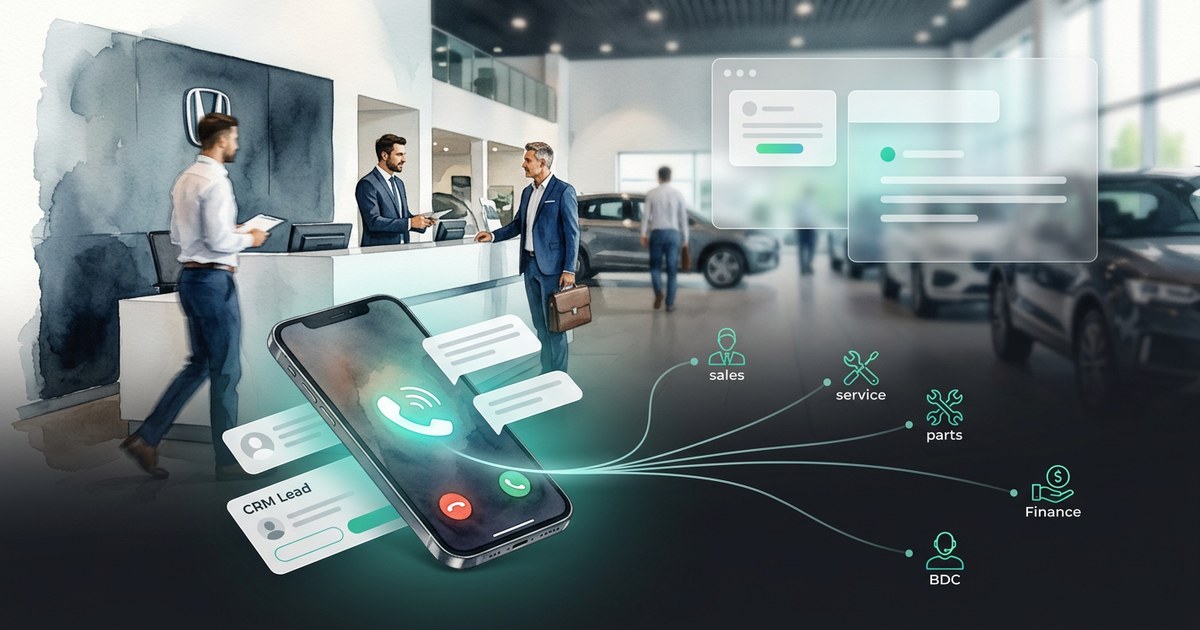
Recover sales, service, parts, and BDC calls with instant text-back, lead qualification, CRM logging, and department routing.

AI Lead Follow-Up Software for Small Business
Compare lead follow-up workflows for calls, forms, ads, texts, email, CRM updates, booking, and human handoff.