AI Employees vs Hiring in 2026: Real Cost Comparison
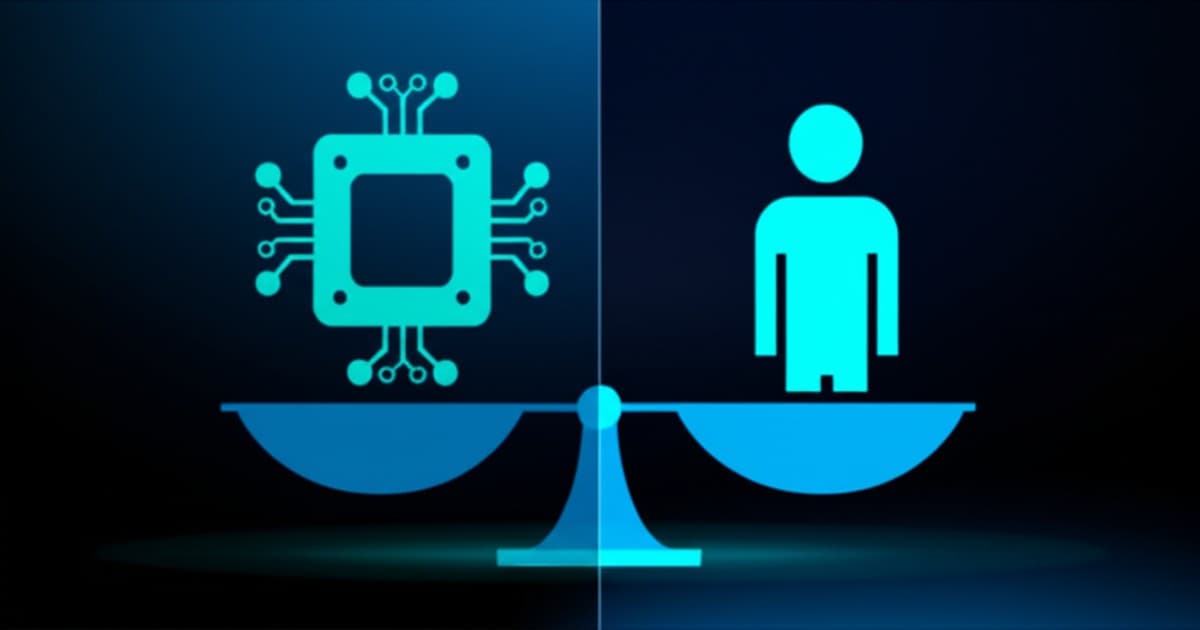
Your business is growing. You need more capacity. The instinct is obvious: hire someone.
But before you post that job listing, run the numbers. In 2026, the math on hiring vs. AI has shifted dramatically — and for many small businesses, the answer isn't what you'd expect.
This isn't a “robots are coming for your jobs” article. It's a spreadsheet exercise. We're going to compare the real, fully-loaded cost of hiring a new employee versus deploying AI — for a typical 10-person small business.
The True Cost of Hiring (It's Not Just Salary)
When you think “hire a receptionist at $35,000/year,” the actual cost is closer to $52,000. Here's the breakdown:
Direct costs:
- Base salary: $35,000
- Payroll taxes (FICA, FUTA, SUTA): $4,200 (12%)
- Health insurance: $6,000 (employer contribution)
- Workers' comp: $700
- Subtotal: $45,900/year
Hidden costs (year one):
- Recruiting (job posting, screening, interviews): $3,000-5,000
- Onboarding & training: $2,000-4,000
- Equipment (computer, phone, desk): $1,500-2,500
- Software licenses: $1,200/year
- Subtotal: $7,700-12,700
Ongoing costs people forget:
- Paid time off (15 days average): $2,019
- Sick days (5 days average): $673
- Management time (supervision, reviews): $2,500/year
- Turnover risk: The average cost of replacing an employee is 50-200% of their salary.
Real year-one cost: $52,000-$58,000 for a $35K salary position. And that employee works 2,080 hours per year — minus PTO, sick days, breaks, and meetings, you get roughly 1,700 productive hours.
The True Cost of AI
An AI employee for customer communication, scheduling, and basic administrative tasks:
- AI employee platform: $1,500-2,500/month
- Phone/SMS service: $100-200/month
- Integration setup (one-time): $500-1,000
- Annual cost: $19,800-$33,600
And that AI employee works 8,760 hours per year. Every hour. No breaks. No sick days. No vacation.
The cost per productive hour tells the real story: $30-34/hr for a human employee vs. $2.26-3.84/hr for AI. That's roughly 10x more cost-effective — before you even factor in 24/7 availability and unlimited scalability.
But Wait — AI Can't Do Everything
Let's be fair about limitations. AI employees in 2026 are excellent at:
- Answering phones and routing calls
- Scheduling appointments
- Responding to common questions
- Processing routine paperwork
- Sending follow-up emails and reminders
- Qualifying leads
- Basic data entry and reporting
AI employees are NOT good at:
- Complex negotiations
- Handling emotionally charged situations that need genuine empathy
- Creative strategy and decision-making
- Building deep personal relationships
- Physical tasks (obviously)
- Novel situations with no precedent
The Hybrid Approach (What Smart Businesses Actually Do)
The real answer isn't “AI or humans” — it's “AI AND humans, deployed strategically.”
Here's what a 10-person company typically looks like after implementing AI:
Before AI (10 employees):
- 2 people handling phones & email (40 hours/week each)
- 1 person doing scheduling & admin (40 hours/week)
- 7 people doing revenue-generating work
After AI (10 employees + AI):
- AI handles 80% of calls, emails, scheduling
- Those 3 people now spend 80% of their time on higher-value work
- 9.4 people effectively doing revenue-generating work (vs. 7 before)
- After-hours coverage that didn't exist before
That's a 34% increase in productive capacity without hiring anyone. For a deeper look at which workflows to automate first, see our complete automation guide.
Modeled Scenario: A 12-Person HVAC Company in Dallas
The following scenario is modeled based on industry data from HVAC businesses in the Dallas-Fort Worth area.
Before AI:
- 2 office staff answering phones (combined $70K/year)
- Missing 30% of after-hours calls
- Spending 15 hours/week on scheduling logistics
- Revenue: $1.8M/year
After deploying AI employees:
- AI handles all incoming calls 24/7
- Office staff shifted to dispatching, customer relationships, and upselling
- Zero missed calls (including nights and weekends)
- Scheduling automated — 15 hours/week freed up
- AI cost: $2,500/month ($30K/year)
Projected result after 6 months:
- Revenue increased to $2.1M (17% growth)
- After-hours calls alone projected to generate $180K in new revenue
- Office staff report higher job satisfaction (less phone time, more meaningful work)
- Net savings: $40K/year + $300K in captured revenue
When to Hire a Human Instead
Despite the math, there are clear cases where hiring a human is the right call:
- Client-facing relationships where personal connection drives revenue (sales, account management)
- Creative roles that require original thinking (marketing strategy, product design)
- Leadership positions that need judgment, mentorship, and cultural stewardship
- Highly specialized knowledge work that changes frequently
- When your team is burned out — sometimes you need another human, not another tool
How to Decide: The 80/20 Test
Take any role you're considering hiring for. List all the tasks that role would handle. Then ask:
- Can AI handle 80% of these tasks today? → Deploy AI, use savings for higher-value hires
- Is 80% of the role relationship-dependent? → Hire a human
- Is it a mix? → Deploy AI for the routine parts, hire part-time for the rest
The Bottom Line for a 10-Person Company
- Deploy AI first for customer communication, scheduling, and follow-up ($2K/month)
- Redirect existing staff from admin to revenue-generating work
- Hire humans for roles where relationships, creativity, or physical presence matter
- Measure after 90 days — most businesses find they need fewer new hires than expected
The companies that thrive in 2026 aren't choosing between humans and AI. They're using AI to make their human team unstoppable.
Ready to Run the Numbers for YOUR Business?
Get a free cost analysis — see exactly how much you could save with AI employees.
Fill Out the Form →Related notes.

The ROI of AI Employees: Real Numbers from Real Businesses
Real data from businesses using AI employees. Average time saved: 23 hours/week.
How to Replace 5 SaaS Tools with One AI Employee
The average small business pays $1,200/month in SaaS. One AI employee replaces 5 of those tools.

AI Receptionist vs Human Receptionist: Real Cost Comparison
The real difference isn't salary — it's missed calls, consistency, and scalability.