Plumbing Answering Service: AI for Emergency Calls
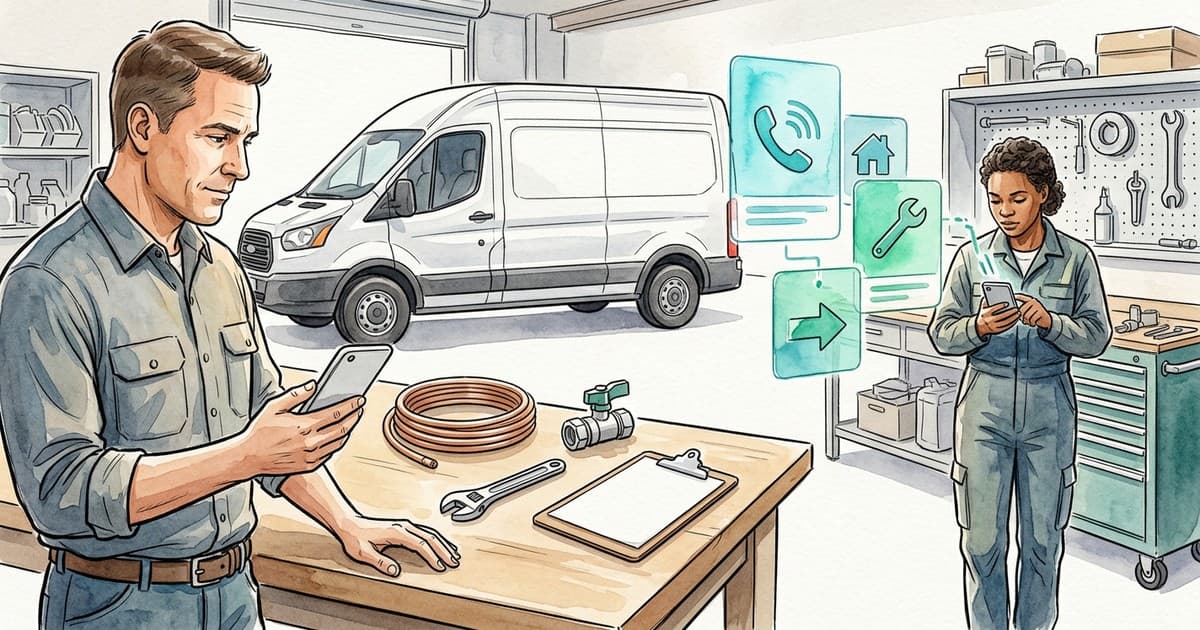
A plumbing answering service with AI answers emergency calls, qualifies job urgency, recovers missed calls, books routine jobs, and routes service requests before homeowners call another company. The workflow should understand active leaks, sewer backups, water heater issues, clogged drains, routine installs, estimates, and after-hours dispatch rules.
For plumbers, speed is part of the product. A homeowner with water on the floor rarely waits for the second callback.
Plumbing calls are urgency-driven
A plumbing call can be a routine estimate or a real emergency. The answering workflow needs to identify the difference quickly without forcing the caller through a generic script.
Useful plumbing intake asks what is happening, where the property is, whether water is active, whether the shutoff has been found, what fixture or line is involved, and whether the caller needs same-day help.
Missed calls turn into competitor calls
Plumbers miss calls while driving, crawling under sinks, working in noisy rooms, or talking with existing customers. That is normal. The problem is letting the missed call sit unanswered.
Instant missed-call text-back gives the homeowner a useful reply within seconds. It can ask what happened, collect the address or ZIP code, and keep the conversation alive until a human can review the job.
Emergency routing needs clear rules
AI should not guess its way through safety-sensitive calls. Burst pipes, sewage backups, gas concerns, no hot water for vulnerable customers, flooding, and active leaks should use strict escalation paths.
Routine drain cleaning, faucet replacement, inspection requests, remodel questions, and future estimates can become structured callback or booking tasks.
Connect intake to dispatch and follow-up
A good plumbing answering service produces a clean summary: caller name, contact, address, issue, urgency, photos if useful, shutoff status, and preferred time.
That summary can go to the owner, dispatcher, CRM, field-service platform, or shared inbox so the team starts from context instead of a voicemail.
Where AIEmployees fits
AIEmployees builds plumbing answering as managed call coverage and lead response automation. The setup can include live-call answering, missed-call text-back, emergency triage, CRM notes, callback tasks, and human handoff.
The goal is not to replace the plumber. It is to protect the first response while the plumber keeps working.
Implementation checklist
- Map plumbing call types: leak, clog, sewer, water heater, fixture, install, remodel, estimate, warranty, and vendor.
- Define escalation rules for active water, sewage, gas concerns, vulnerable customers, and after-hours emergencies.
- Collect name, address, issue details, urgency, shutoff status, photos, and preferred appointment time.
- Send instant missed-call text-back when the team cannot answer.
- Create summaries for dispatch, CRM, field-service software, or callback tasks.
- Track answered calls, recovered missed calls, booked jobs, and urgent handoff quality.
FAQ
Can AI answer plumbing emergency calls?
Yes. AI can collect emergency details, identify active water, gas, sewage, or no-hot-water urgency, route the call to the right human, and text missed callers within seconds.
What should plumbing call intake collect?
Useful plumbing intake collects the address or service area, issue type, urgency, water shutoff status, property type, photos when helpful, and preferred appointment or callback time.
Does AI replace plumbing dispatch?
No. AI protects first response, missed-call recovery, and structured intake, then hands urgent or complex work to the owner, dispatcher, or on-call technician.
Want this workflow built for your business?
AIEmployees can map the calls, intake, routing, follow-up, and reporting around your real tools and team.
Fill Out the Form →Related notes.
AI Dispatcher for HVAC and Plumbing Companies
Separate emergencies, collect job details, route technicians, recover missed calls, and protect service leads.

AI Receptionist for Plumbers: Answer & Book More Calls
Answer emergency plumbing calls, recover missed leads, collect job details, and route urgent work before customers call the next plumber.
AI Receptionist for Plumbers in Dallas
A Dallas buyer guide for plumbing intake, on-call routing, missed-call text-back, and dispatch-ready handoff.